2007 Audi Cross Cabriolet Quattro Concept


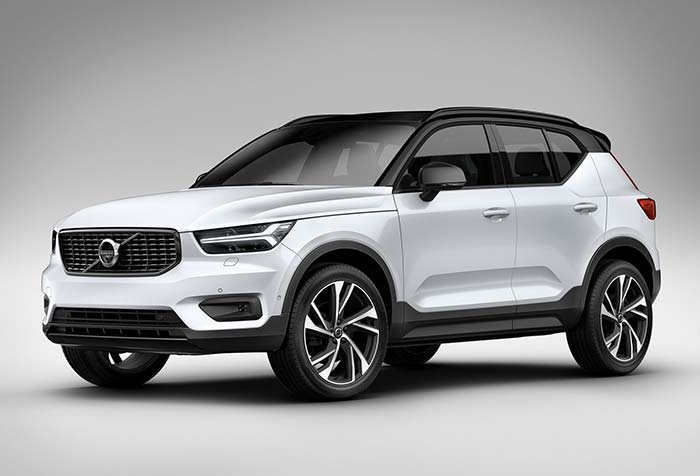
2008 Audi  Q7 Coastline V12 TDI


2007 Audi virtuea Quattro Concept

It’s the year 2057 and Audi continues to revolutionize through technology, offering a hydrogen-powered vehicle that combines artificial intelligence with avenues of self expression. This single-seat, autonomous driving machine functions as a solid unit at its core, while providing a myriad of possible holographic exteriors stored in a library and accessible through the vehicle’s interactive holographic interface.

Virtuea’s holographic exterior provides a variety of possibilities, allowing the driver to select from the most innovative designs from one minute to the next. The vehicles image can now be proudly displayed without environmental impact, as no physical materials are needed regardless of size.


Jae S. Min, Chief Designer at Volkswagen Group of America, Design Center California (DCC). The complex is one of three Volkswagen Group design centers worldwide, and the only one outside of Germany. Born July 22, 1971 in Seoul, Korea, Jae is the eldest, and only male out of two children. His father is an architect, his mother was trained as a ballerina, and although he says that a atch made in either heaven or hell, it also a recipe for someone who excels at designing structures that move gracefully through unlimited space.

The EGO, the world’s first compact semi submarine, itscockpit is located below the floating hull so while cruising about you always have a lovely view of what lies below. The windows of the EGO are made of special acrylic materials, mostly used in aquariums to withstand water pressure and enable light transmission for better visibility.


It features a top speed of 4 knots for 4 hours, and it runs for 6-10 hours on a single charge. Other equipment includes a monitoring LCD system, battery monitoring systems, VHF marine two way radio, digital depth gauge, foot pedal, compass and clock.

Raonhaje

DEOS-Futuristic flying police vehicle

Conceived by Kyuseop Lee, a graphic & Industrial designer, the “Deos” is futuristic flying vehicle for cops that ironically looks everything but a vehicle from any angle. Moving on a virtual track system, the vehicle concept is propelled by an air jet engine.


Drawing inspiration from nature, the Deos features flexible body structure to sustain the pressure at high speed. Running on hydrogen fuel, the vehicle integrates a support in the form of a wheel while landing as well as taking off. It also features a beam or flashlight, controlled by driver’s helmet, to chase the culprits in the dark.


The Deos presents a compact body structure, which measures 241 x 95 x 89 inches (LWH), to allow brisk movement.

Q'S PORTFOLIO

Ferrari World Design Contest is a competition - launched by the marque from Maranello in collaboration with Autodesk, the project's technical partner and official sponsor – for schools and universities from the automotive and design sectors in Italy and abroad to create the Ferrari of the future.

The participants are asked to create a pure hypercar with technology and materials from the latest generation, a car with an extreme architecture, while functional under every aspect. The contest runs until July 2011. The jury, under the presidency of Luca di Montezemolo, will award an internship at Ferrari's Centro Stile, lead by Flavio Manzoni, to the first and second placed participants as well as monetary prizes.


Maranello, 19th July 2011 – Students from Seoul’s Hongik University have won the Ferrari World Design Contest, a competition in which 50 highly prestigious universities across the globe took up Ferrari’s challenge of imagining its cars of the future. The Korean school was chosen ahead of the second-placed IED of Turin in the final with London’s Royal College of Arts finishing in third position.

The first three classified models are:

1) Eternità – Kim Cheong Ju (Korea Rep.), Ahn Dre (Korea Rep.), Lee Sahngseok (Korea Rep.) – Hongik University (Seoul)
2) Xezri – Samir Sadikhov (Azerbaigian) – IED (Turin)
3) Cavallo Bianco – Henry Cloke (Regno Unito), Qi Haitao (Cina) – RCA (London)

Ferrari World Design Contest

AQUA_one-manned submersible watercraft


This idea isn't so far-fetched. As Earth gets increasingly crowded and polluted, people are trying to find another space to live, ocean. Although, people can¡¯t stand alone under the water yet, surely, technology can make this happen.


As we believe, in the near future, people could live under the water. If it comes true, people will need a new type of underwater transportation like a submersible.
Here is my piece of work as an answer, AQUA, is a one-manned submersible watercraft sailing both on and under the surface of water.


Winner of the IDEA Design Awards for 2008, Aqua is a striking transportation vehicle for the future, although I can think of many keen for marine exploration who would dream to take it for a drive today—including myself, obviously.

Designers: Sungchul Yang, Woonghee Han

AIRCRUISE: A Fuel Cell Powered Zero Emissions Luxury Airship
Visionary concept work for Samsung C&T explores the future of travel and transport.

London, UK, 03 February 2010 - Leading design and innovation company Seymourpowell is today unveiling full details of its visionary transportation concept, Aircruise - a giant, vertical airship powered by natural energy and designed to carry travellers in style and luxury.

Originally a self-generated project, Seymourpowell's Aircruise is the concept design for a hotel in the sky, with low passenger numbers and huge internal spaces offering room for living, dining and relaxing, as well as scope for dramatic and inspirational public spaces. The initial design proposes a bar/lounge zone, four duplex apartments, a penthouse and five smaller apartments.

The concept subsequently captured the imagination of Korean giant Samsung Construction and Trading (C&T). Driven by its interest in new materials for building, Samsung C&T appointed Seymourpowell to refine the idea and produce a detailed computer animation of the proposed experience to illustrate this visionary approach to the future.


Seymourpowell's Aircruise concept presents an alternative take on the future, suggesting 'slow is the new fast'. Nick Talbot, design director at Seymourpowell explains, "The Aircruise concept questions whether the future of luxury travel should be based around space-constrained, resource hungry, and all too often stressful airline travel. A more serene transport experience will appeal to people looking for a more reflective journey, where the experience of travel itself is more important than getting from A to B quickly."

On Aircruise, it is the very abundance of time and space that defines the luxury experience. In a world where speed is an almost universal obsession, the idea of making a leisurely journey in comfort is a welcome contrast. Talbot explains, "The physics of the airship requires a gigantic volume of lifting gas, yet simultaneously demands a relatively limited amount of weight. This allows for a potentially large amount of space with relatively few people onboard - a luxury for any traveller."

Talbot added, "It's a world cruise not limited to the ocean, offering instead the dream-like quality and absolute freedom of flight. Passengers can choose to dine thousands of feet above a city, or take in the view whilst moving through the air over the ocean or a national landmark."

Lifted by hydrogen and powered by solar energy, the Aircruise concept also has obvious environmental benefits. Seung Min Kim, design director at Samsung C&T commented, "This was a dream concept project for us, helping to realise a future of sustainable buildings combined with innovative and luxury lifestyle. In an age when environmental impact is a key consideration for architecture, we are keen to extend this vision of the future by searching for solutions that can be realised by 2015 - the year that many futurologists foresee as the turning point for the future."


Proposed conceptual specifications for Aircruise as follows:
From the docking rig at the base to the tip, the ship is 265 metres tall. Hydrogen, the lightest gas, is used as the lifting gas, and is capable of lifting around 1.2Kg per cubic metre of volume. Large PEM hydrogen fuel cells will provide on board power and some drinking water.

The volume of the main envelope in the ship is calculated at 330,000 cubic metres, which equals 396,000 Kg of available lift at sea level (1,000Kg = 1 Tonne (t)).

Seymourpowell

SGK E-passenger
Max Speed 130 Km/h, Drive Range 400 km per single charge, 0-100km: 5.5 sec.


The SGK is a compact two seat vehicle ideal for short range transportation or utility work. The SGK can be customized into several types, and we plan to initially develop the SGK into a regular speed E-passenger vehicle and both a regular speed and low speed E-utility vehicle. We market the SGK E-passenger vehicle to the fleet customers such as rental car services, general government offices, police, military, etc.


SGK Utility
Max Speed 130 Km/h, Drive Range 400 km per single charge, 0-100km: 7 sec

SGK Utility is a conversion from SGK. It was developed for the delivery and farming.


LEO EV3

Little-know Korean car maker Leo Motors is set to take on the might of Tesla in launching its own electric super car by the end of 2011.

Named the LZ-1, the car has impressive performance stats, even beating its Roadster rival from Tesla. Leo Motors says it expects that the car will have a top speed of up to 161 miles per hour, maximum torque of 68kg/m generated by its 240 kW electric motor. Meanwhile the Tesla Roadster for having a maximum speed 125 miles per hour, and a maximum torque of 40kg/m using 215 kW electric motor. Both cars have a range of around 249 miles per hour.

Strong yet super light, the car has carbon fibre body and aluminium alloy body. In development since 2006, the electric vehicle experts at Leo Motors crafted the model using new technologies emerging from 56 patents pending or accepted.

Leo will also develop LZ-1H-a plug in hybrid electric vehicle (PHEV) version which uses a mix of hydrogen and LPG to fuel the generator inside of the super car and keep supplying electricity to the electric power train. Using this technology, it is expected that LZ-1H will drive 560 miles per fuelling.

The firm has already finished the development of rolling chassis for the vehicles.

John Lee, CEO of Leo Motors, is working with Wayne Draper and Steve Park, former chief designers of Ford, for the styling of the car. According to Mr. Lee: “Our goal is to make the new electric super car drive 0-60 miles per hour from the start within 2.9 seconds. If the goal is achieved Leo’s new super car would be the fastest among EVs including Tesla.”

Leo Motors


ⓒ copyrights 2003-2013 Designersparty, all rights reserved. all material published remains the exclusive copyright of Designersparty.