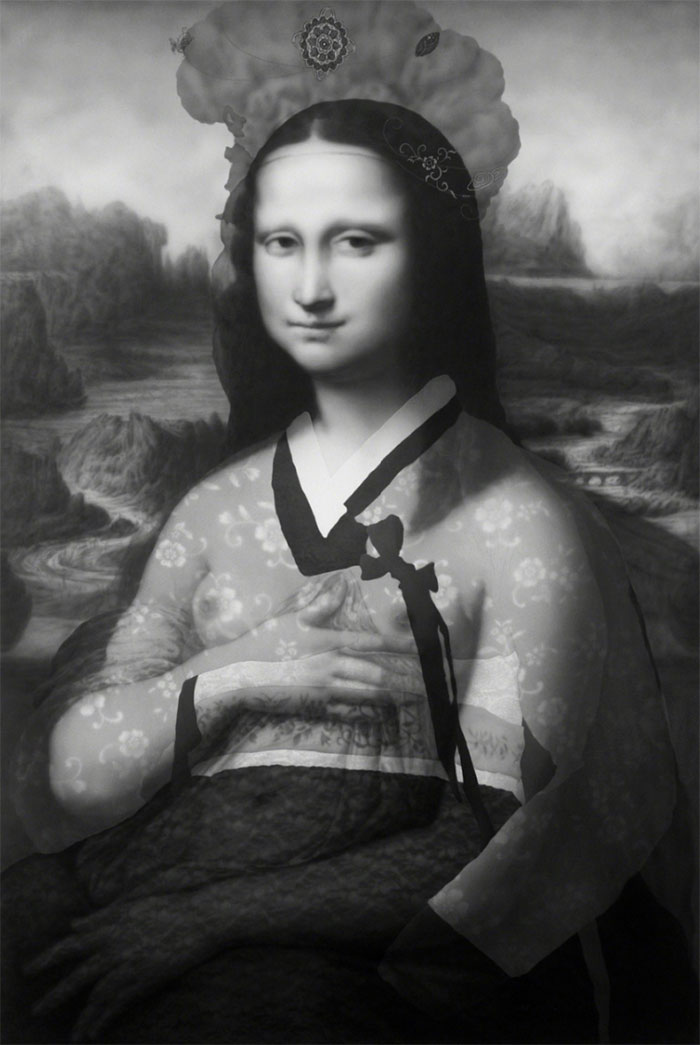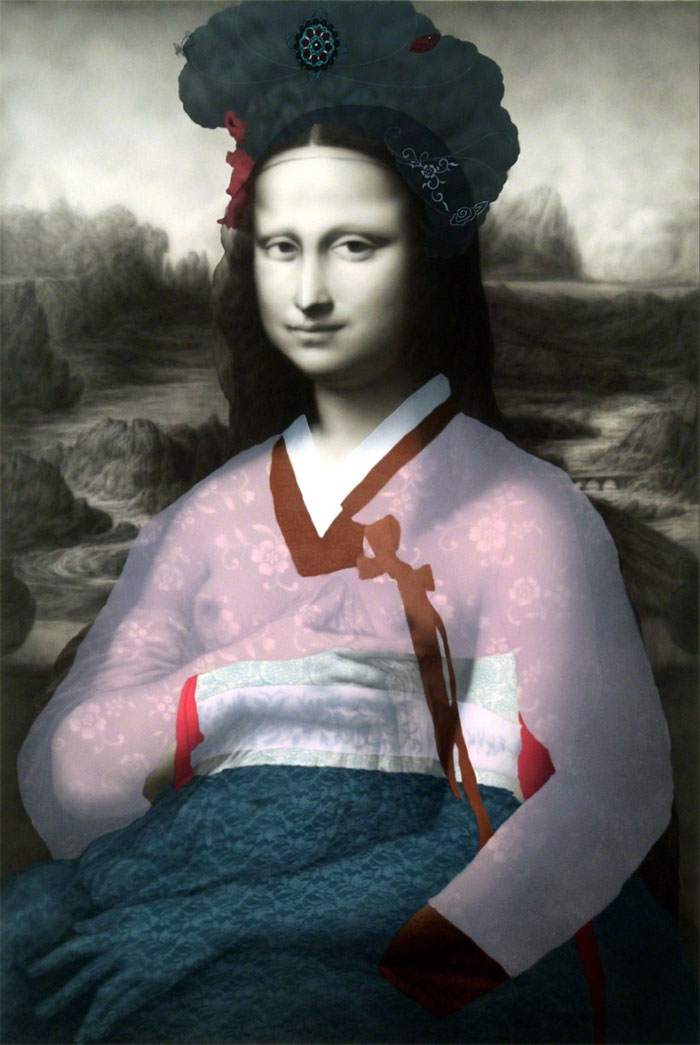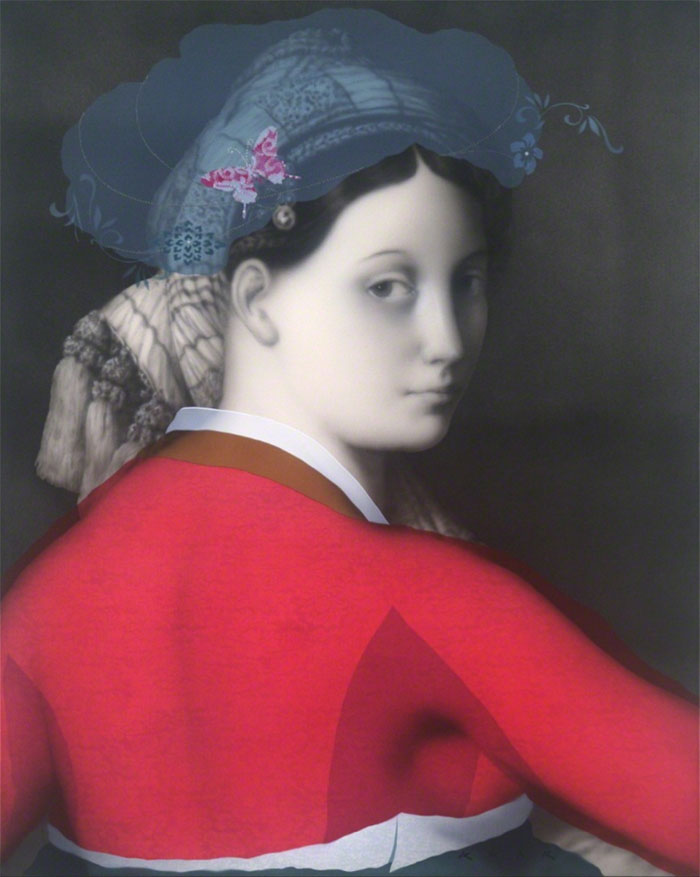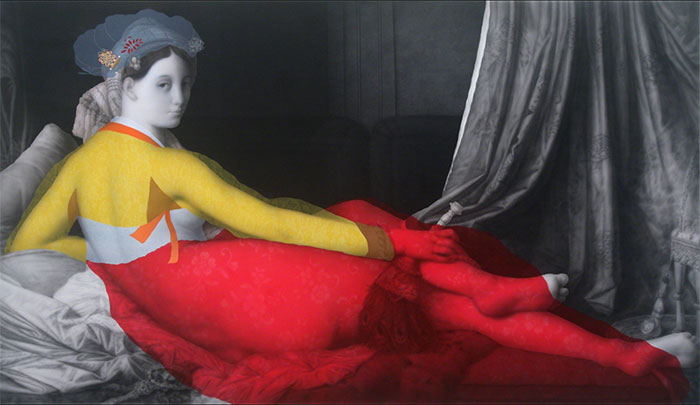
phase of the moon . 2010 40cm x 55.5cm mixed media on paper

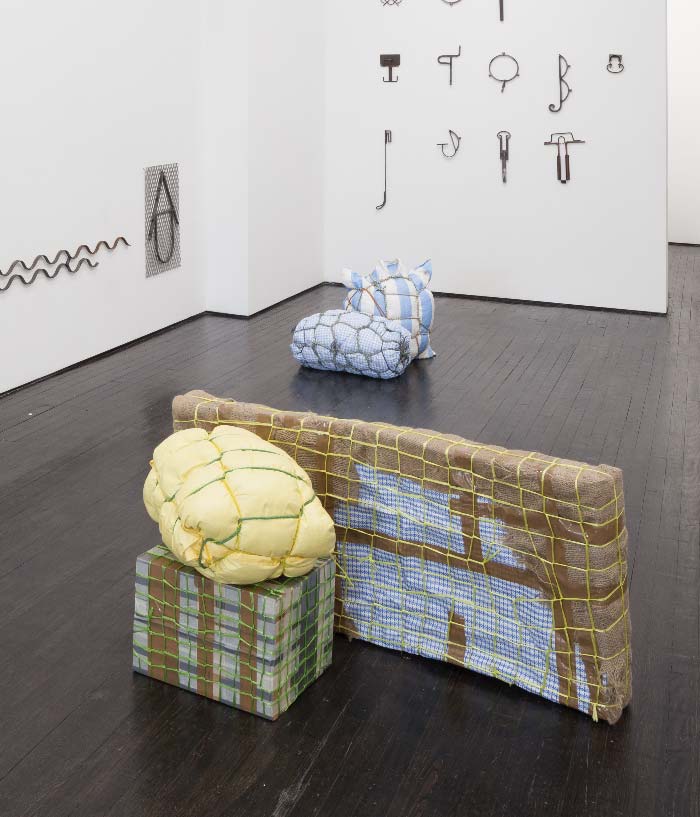
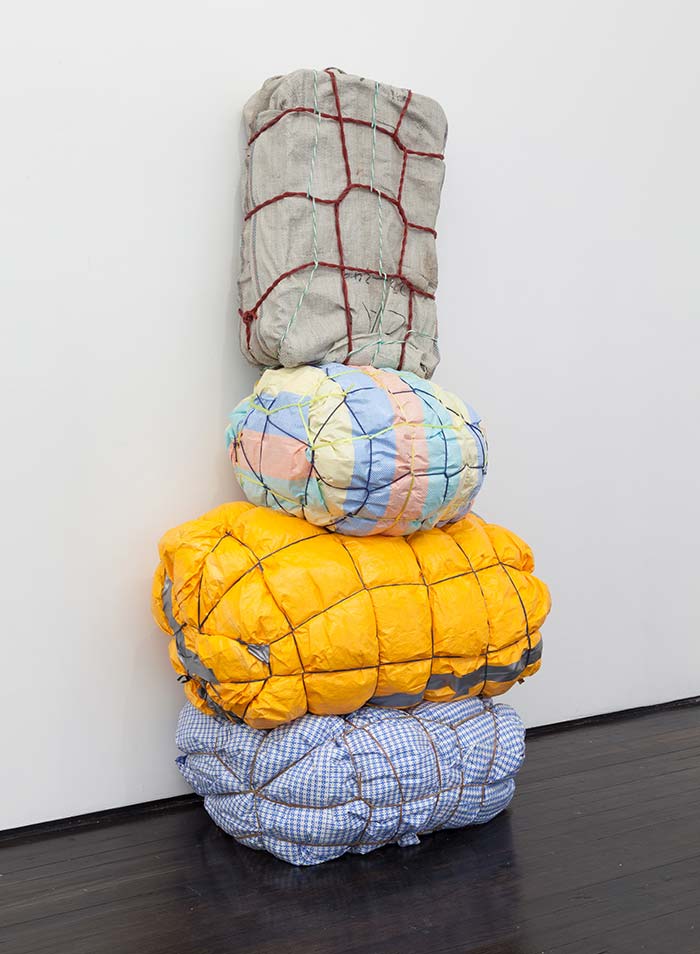
phase of the moon . 2010 collage, low-density polyethylene 37cm x 27cm x 15cm

measured emotions . 2009-2010

My work has involved the creation of conceptually based psychological objects and I use many geometric lines which helps me express my subconscious mind.

We can see people’s face emotions but how about if we can measure their emotions through shapes of geometry? Our emotions play an important role throughout the span of our lives because they enrich virtually all of our waking moments with either a pleasant or an unpleasant quality. I was wonder if we can measure our emotions with shapes of geometry.

To realize this emotional state in geometric shapes, I use many other type of colors and patterns papers cutting out images from magazines or vintage books using collage technique with mixed media such as oil painting or an acrylic.


brainwash

Eva Eun-Sil Han was born in Korea where she lived for 27 years.  She was first introduced to collage in primary school. As a child she loved to play with papers, like “drawing paper, paper dolls, cutting them out, making their outfits.” She studied for two years at the Design Institute of Graphic Art in Seoul, Korea and one year at the L’Atelier d’Art de la Grange des Champs, Belgium.

Eva Eun-Sil Han

"Folding Surface 6.9" / 2012 / threads, UV light, Dimensions variable
Solo Exhibition "DIALOGUE LINEAIRE" / galerie laurent müller, Paris

”The virtual space is not existing for me, my art is analog“ – this is a very clear statement for someone who’s art is always being referred to as a translation from virtual aesthetic to an analog space. But Jeongmoon Choi is fighting against that and emphasizing the core of her work: space.


"Construction" / 2011 / approx. 30 sqm space, threads, black lights
Exhibition “AMARCORD” / Gallery Fellini, Berlin

Growing up in Seoul, Jeongmoon learned to deal with limited space in a playful way while thinking about its presentation as a way to define social relations. The dream of the South Korean artist back then, which was to wander around her drawings, has come true. Her installations made out of strings create another world that enables the spectator to have a whole new experience of space; almost like an invitation to meditate.


"8.9" / 2012 / threads, wooden frame / 200 x 130 cm
Solo Exhibition "DIALOGUE LINEAIRE" / galerie laurent müller, Paris

What is really special about Jeongmoon’s work is the relation between material and effect, which is also proven in her current work “Drawing in Space“. Jeongmoon gets her inspiration from the constant transformation of her urban environment. But this doesn’t necessarily always lead to something positive. She has witnessed a myriad of changes in Berlin, where she has lived for over ten years now. Unfortunately, Jeongmoon’s atelier in Prenzlauer Berg, a mix of laboratory and workshop will soon fall prey to the redevelopment wave.


"Birdcage" / 2006 / threads, black lights / approx. 16 sqm space / 3. Berliner Kunstsalon, Berlin

Berlin based artist Jeongmoon Choi latest installation is pretty outstanding. Her 3D UV lights + Thread Installation dresses rooms by creating shapes and mapping with threads that she illuminate with UV lights. A genius concept that create beautiful 3D visual effects.

Jeongmoon Choi


Rude Dog Acrylic, on canvas_130x194cm_2010


Excrement of an Artist, Acrylic on paper_194x97cm_1999


A Leper in the Field, Pencil on paper_109.5x79.5cm_1990

Ahn Chang-hong, both in his own self and in his works, is a typical loner. Traces of wretchedness and splendour can be found alike in his paintings and the artist's obsessive interest in desertion and loneliness, alienation and anxiety, the bestiality of human character, fear and tragedy are displayed.

Through perverse and twisted portraits of himself and his family, An has already expressed his fear of and distance from the already torn-apart outside world. The fear that had made the eyes of the family members black and their mouths
wide open might yet be drawing a dark shade over his soul.

This dark aspect of An cannot wholly be admitted to his personal history or character.
It is often interpreted that the shades in our historical life, especially our gloomy social consciousness, that carries a weight with them, are reflected in his works. His method of representation, however, is far from being true to circumstances.

His inclination is more towards transforming reality into fables. In this transformation, An gives a dashing display of the fundamental tragedy of human character, the never-to-be-healed distortion in human character. This is the very reason I believe An Chang-hong is one artist whom we should cherish and remember.

Faces, Bodies, Souls, and a Life Story of One Artist

Ahn Chang-hong


The idea of Whatever You Say is simple: others’ words sometimes hurt people. Whatever You Say is a giant wooden gun, which generates a short uncomfortable low frequency sound when anyone stands in front of the work. Whatever You Say with two barrels represents the power of spoken words to damage or injure through sound alone. - Hye-yeon Nam


Inspired by ultrasonic weapons used by military and police forces, "whatever You Say" is an installation that produces low frequency sound. The sound is generated for two minutes every ten minutes when an audience is detected. It is felt as vibrations and intensifies as a person stands closer to the piece. If language is increasingly the soft power employed by pop stars and politicians then "Whatever You Say" is a visceral reminder of the raw physicality of sound itself. - Inmi Lee

Credit :
Hye Yeon Nam   Inmi Lee

A small house with a yellow attic room and already forgotten old works

Spatial drawing on Deajeon Creation Center’s exhibiton space-Daejeon Museum of Fine Art Creation Center, Daejeon, S.Korea/2010

Dae Hong Kim

"quiescent light” acrylic on wood


Safewalls Cirque poster


50 edition print of "plumlit night"


“going forth with apples”

Amy Sol is an American artist of Korean ancestry, who lives in Las Vegas, Nevada. She is a member in good standing of a loose knit community of artists practicing Pop Surreal, Lowbrow, or, as Robert Williams defines it, "cartoon-tainted abstract surrealism." She typically paints upon treated wooden panel, incorporating the grain of the wood into the painting. Her style integrates both narrative and figurative styles with the mystic.

“ The reason (is) the wood really helps me a lot, and I've sort of become addicted to using wood panel. It's become a really important part of the whole piece -- all together -- it holds the whole piece together. The grain of the wood usually is the start of the motion; the flow. The wood always reminds me to keep things moving. When you look at wood grain, sometimes -- and you can almost feel the sense of something alive, of course it was once alive, but that imprint; the foot-print of it is still there. When I paint right on the wood it influences the colors I use. It reminds me to keep things really natural. ”
—Amy Sol, Semi-Permanent Lecture, 2008 Sydney, Australia

Amy Sol

Amadéus Leopold (born Hanbin Yoo, 3 August 1987) is a Korean-American violinist. He made his international debut at age twelve at the 42nd Annual Grammy Awards and made his Carnegie Hall debut in 2009 following a decade of study with Itzhak Perlman at the Perlman Music Program and the Juilliard School.

Born in Seoul, Korea, Leopold began his violin studies at age five and won a top prize at the Korea Times Competition the same year. He made his first national television appearance at age eight in a documentary profiling Korean prodigies on the KBS network, showcasing his talent in violin performance and composing music, poetry, and plays. At age nine, Leopold was the youngest student accepted to the Korean National University of Arts. By age ten, Leopold had made his orchestral debut with the Seoul Philharmonic Orchestra and performed solo recitals in several major concert halls throughout Korea.

He already had an exotic, double-barrelled name that wouldn't seem out of place alongside Björk, Madonna, Rihanna or Lady Gaga – and a daring performance style and aesthetic to match. But the classical chameleon formerly known as Hahn-Bin has changed his name to Amadeus Leopold in a bid to pay tribute to his violin idols.

"Amadeus Leopold is the name I have chosen for my American citizenship, while Hahn-Bin is my given Korean name," the New Yorker explained.

A kind of David Bowie of the classical music world and an underground fashion icon, the 25-year-old told Limelight that his new stage name reflects his "marriage and commitment to the new golden era of music – one where there is no boundary between what is classical and what is pop.

"We are very near that golden era of music; one that is reminiscent of the days when Liszt and Kreisler, Rachmaninov and Mozart himself, were the rockstars of their day. My role in this world is to embody the renaissance of classical music itself; I wanted to make that message clear to the world."

Amadéus Leopold


ⓒ copyrights 2003-2013 Designersparty, all rights reserved. all material published remains the exclusive copyright of Designersparty.