Winners of Williamsburg Waterfront Performance Venue Competition1st Place: "park regeneration story_ landscape origami"
Euibeom Lee, Keunyoung Ryu, Kunho Kim


"Urban parks provide rest and comfort to people who live in the city regardless of its size or location. In addition, parks are where people can reconnect to the mother nature in the midst of busy city lives.  Parks also serve as romantic dating spots, and sometimes create dramatic atmosphere. The urban parks bring out the most synergies when they are fully integrated with infrastructures, nature, climate, and events and add more livelihood and dynamics to the city."

The site of Williamsburg is a place where a music festival is held annually within Manhattan, and it provides relaxation to every visitor. This place can create different atmosphere based on the characteristics of events, the density of people at the events, and the time.  Though, it is utilized in many different ways such as a venue for events, its primary purpose is to provide rest to people and create community for them.

Despite that a physical program, a concert hall, is added to the site of Williamsburg, the park has to maintain its natural atmosphere of the waterfront which is attributed to a harmonious combination of the purpose, surface area, east river and the site. The concert hall should have not only plans that enhances spatial completeness and software completeness as it serves as a medium that links Manhattan city and programs of the park.
To achieve these goals, origami methodology is used to the entire landscape. With this design methodology, the park can preserve its physical area and become the hub that connects tensions of festivals and ambience of city by planning a concert hall using landscape.

Winners have been announced for the suckerPUNCH-curated Williamsburg Waterfront Performance Venue competition. This open international ideas competition asked for an integrated design of an innovative music venue in the East River State Park located in Williamsburg, Brooklyn. The new park is the site of the ‘JELLY Pool Parties’ summer concert series which brings 10,000 fans to the site on sunday afternoons to enjoy free performances by progressive independent artists. suckerPUNCH challenged designers to develop a network of stages and facilities which can accommodate and enhance these performances through a progressive design strategy.

Currently a hot contender in the running for the new V&A at Dundee building, New York-based practice REX was asked to design a residential complex in Songdo Landmark City, Incheon, Korea in which every apartment offers direct southern exposure, cross-ventilation, and views.

Korean zoning guidelines and local building practices typically produce towers that fail to provide these three key, locally-prized amenities. Furthermore, prevailing site strategies carve up the open space such that the result is not the often-advertised “Towers in a Park,” but anemic “Towers in a Yard” instead.

Block A4 challenges conventional Korean development practices to provide the key amenities within each unit and a true publicly-accessible park at grade.


Surprisingly, the structural tube can be 50% perforated, as long as all openings are located to maintain continuous load paths and to minimize lateral displacement. The dynamic behavior of the perforated structural tube is well within acceptable standards.


Korean towers typically have four or more units per floor. As a result, many apartments have limited direct light, no southern exposure and poor cross-ventilation. By splitting a single tower with four units per floor into four separate towers with only one unit per floor, the resulting super-slim building type...


...it becomes possible to reduce the project build time by 63% compared to conventional gang-form construction methods. (Image: Magnusson Klemencic Associates)


Exaggerated visualizations from structural analysis (Image: Magnusson Klemencic Associates)


In Korea, gang-form construction is commonly used for the exterior walls and columns. Traditional concrete construction is used for interior bearing elements and floor plates. As an alternative, by using jump-up/Jackdown construction to build the perforated structural tube,...


The lobby of each tower occupies a double height space accessible from both grade and parking levels and provides daylight to below-grade community facilities.


By organizing the landscape at grade into a series of continuous bands, SLC Block A4 presents an alternative site strategy that will provide an open, active, pedestrian-friendly park. (Image: Bureau Bas Smets)


The primary pedestrian routes are consolidated into only four hardscape paths, avoiding a patchwork that would, on a site of this size, disperse and diffuse activity and divide up the green space. (Image: Bureau Bas Smets)


Project Data:

LOCATION: Incheon, Korea
CLIENT: Songdo Landmark City (SLC)
PROGRAM: Residential towers with a total of approximately 2,000 units, community facilities, retail, and underground parking
AREA: 342,900 m² (3,691,000 sf)
CONSTRUCTION COST: Confidential
STATUS: Completed Concept Design
DESIGN ARCHITECT: REX
LANDSCAPE ARCHITECT: Bureau Bas Smets
EXECUTIVE ARCHITECT: HYUNDAI Architects & Engineers; SAMOO Architects & Engineers
KEY PERSONNEL: Adolfo Albaisa, Haviland Argo, E. Sean Bailey, Keith Burns, Nicolas de Courten, Rob Daurio, Jeremiah Joseph, Hui Lee, Katharine Meagher, Clinton Miller, Roberto Otero, Michelle Petersen, Joshua Prince-Ramus, Jacob Reidel, Nikolas Rychen, Tal Schori, Hala Sheikh, Nuo Xu
CONSULTANT: Magnusson Klemencic Associates

REX

Three winners as well as three Honorable Mentions have been announced at the 2010 edition of the DawnTown Miami competition. The mission of this annual international architectural ideas competition is to bring creative architecture to Downtown Miami, and to help tell the exciting urban story of Downtown Miami to the world.

competition-winning concept THE MIAMI GLADES
1st Place: THE MIAMI GLADES; Team: CA Landscape, Trevor Curtis + Sylvia Kim (Seoul, South Korea

The 2010 competition brief invited designers to submit creative ideas for a new seaplane airport on Watson Island off the coast of Miami. The jury included Jean Francois Lejeune, Graduate director, University of Miami School of Architecture; Dennis Scholl, VP/ art +Miami program director at the John S and James L Knight foundation; Charles Kropke, Owner of Chalks International Airways; Erick Goldemberg, Principal, MONAD Studio and FIU Architecture Professor; Javier Betancourt, Deputy Director of the Miami Downtown Development Authority; and Francisco Garcia Iglesias, Director of Planning for the City of Miami.

DawnTown Miami 2010

Ju-Hyun Kim, director at New York-based H Associates, has shared with us his vision of a Vertical Theme Park in the middle of Manhattan. The project tries to counteract suburb-located theme parks which, for decades, have been the by-product of automobile-centered society and a catalyst for suburban sprawl and traffic congestion.


As families make their way through traffic jams and endless parking lots in the direction of Six Flags this summer, it will come as no surprise that theme parks were built for an automobile-centric society. As a result, they're out in the middle of nowhere--you have to drive through miles of traffic to get there, leaving a huge carbon footprint along the way. Building suburban theme parks is not just happening in the US, but is a global phenomenon.


In the UK and Korea, Thorpe Park and Everland are about 1.5 hour drive away from London and Seoul, respectively. Theme parks are also massive: acres of land are covered in hot asphalt and mega-extensive grid of infrastructures (power, water, gas, sewage, etc.) has to be installed and maintained throughout the year.

Adding to this is the need to build a large number of accommodation for visitors, demonstrating the seriousness of the spatial invasion of building theme parks upon the suburbia, which otherwise would have remained peaceful habitats of the nature. Indeed, theme parks such as Disneyland and Disney World attracted all kinds of undesirable sprawl to Anaheim and Orlando. Peripheries of the theme parks are wildly packed with fast food joints, hotels, roads, highways, parking lots and so on. This has to change. It's inconvenient and environmentally insensitive.


Why not instead build theme parks in the middle of cities? Instead of sprawling parks with giant footprints, stack the park into a skyscraper. The altitude will only add to the speed and excitement of rides, and the view of the surrounding dense urban environment will be incredible. There'll be so much more to see from the top of the carousel and roller coaster on the perimeter. Best of all, it will be easily reached by public transportation, and the environmental impact will be minimal. Now is the time to build the joyful destination for families’ perfect day out at the center of cities.


Vertical Theme Park in Manhattan

Vertigo World (Observation Deck & Carousel) 
From the Observation Deck at the very top of the building, visitors can stroll around a snaking path the circumference of the building (complete with necessary but unobtrusive guard rails). The view would include staples like the Statue of Liberty and the Empire State Building. Below the deck is a carousel which rotates 360° per hour to offer the very best view of Manhattan--just like a revolving restaurant, some visitors will enjoy the carousel with hors d’oeuvre and champagne, but only this time with a splendid view from 1000 ft above the ground.

Fast Land (Roller Coaster & Flume Ride) 

Terrifying beauty of centrifugal force, coupled with the thrill of heights can be best experienced on the roller coaster which circles down the tower without a pause. As the coaster runs down along the periphery of the tower, succession  of the  views toward Central Park, East River which itself is framed by tall, vertical buildings will be presented almost like a film strip sequence. Intertwined with the roller coaster, there are also spirals of flume ride, where passengers sit in the capsules, which are propelled along the flume by the flow of water. Since the flume will be designed to be turbulent, splash of the water will cool down the summer’s heat from the passengers.

Abyss City (Urban Bungee Jumping) 

Located at 550 feet from the ground, there is bungee jumping facilities with 3 cantilevered out springboard-like platforms. Looking out on density and congestion of the pedestrians and cars on the street and numerous rooftop watertanks, people dive into the liquid of humidity of the city in July. Immediate thrills and chills will surround them as soon as they start freefall. As the Vertical Theme Park will be open 24 hours, many businessmen can come join, after office hours, the Urban Bungee Jumping with their suits and ties to relieve the stressful workdays. Deep in the night, the scattered lights from the other tall buildings will shine like the stars.

360° World (Manhattan Wheel & Sky Promenade) 

Large upright wheel with passenger cars will be located in the middle of the tower. As the wheel spins around, at its lower point, people can even experience the smell of hot dogs from street food carts. At its higher point, lots of pleasant breeze come in to cool them down. Sky promenade is a path for the speculation and observation. It is the sloped ramp along the perimeter from which people can walk alone or in group. Just like the Guggenheim Museum, people can reach the top floor with the elevator and walk down to the ground looking out the city. Only the difference from Guggenheim is the eyesight's vanishing point: it  is not on the picture plane in the gallery, but is on in-between the tall buildings.


Elsewhere Universe (Space Exploratorium & Gate )

The gigantic sphere structure will be suspended from above and will look like it is from another planet or another universe. Just like the outlook, inside this geodesic dome is a ‘zero gravity zone’ where people can experience a space-like environment. In the gate area, passerbys will discover both kids with ice creams in their hands, and businessmen who drop by during the lunchtime. Likewise, in the middle of the blunt facades of the adjacent blocks, people come across the intriguing and welcoming enclave. Likewise, in the middle of Monday to Friday City, people suddenly come across Saturday & Sunday City.

Ju-Hyun Kim

H Associates


International VELUX Award 2010 for Students of Architecture
1st Prize: "Constellation of light fields" by Park Young-Gook, Kim Dae Hyun, Choi Jin Kyu & Kim Won Ill; Hanyang University, Seoul

Jury comments on Constellation of light fields: "The project proposes an immaterial field – installed in an outdoor performance hall of “the Marronnier Park” in Seoul. Today the place has four columns and one translucent roof, which provides homogeneous and monotonous light. The project suggests a change from the material elements to immaterial: Over immaterial columns, the roof is split into stripes of fabric that can be closed for proving shade – or twisted – following various patterns – for generating linear or scattered openings – letting every type of light flow to the field.

The project addresses the big urban space – it addresses the very important issue of controlling light rather than magnifying light. The project addresses structural, urban and social issues by looking into how to revive a space and how to make it habitable and viable.

The jury found that the project idea was very strong and intriguing. The comprehensiveness of the project made it to the top as reliable and viable – and by discussing an idea, which could also be applicable in other climates. Everything shown in the project is about testing – beautifully represented in a series of renderings and photos."

The International VELUX Award encourages students of architecture to explore the theme of sunlight and daylight in its widest sense to create a deeper understanding of this specific and ever relevant source of light and energy. The award is presented every second year to promote and celebrate excellence in completed study works in any scale from small-scale components to large urban contexts or abstract concepts and experimentation.

International VELUX Award

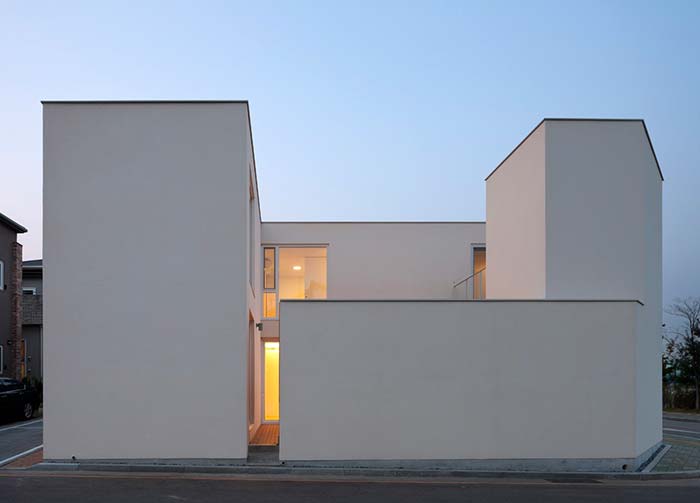
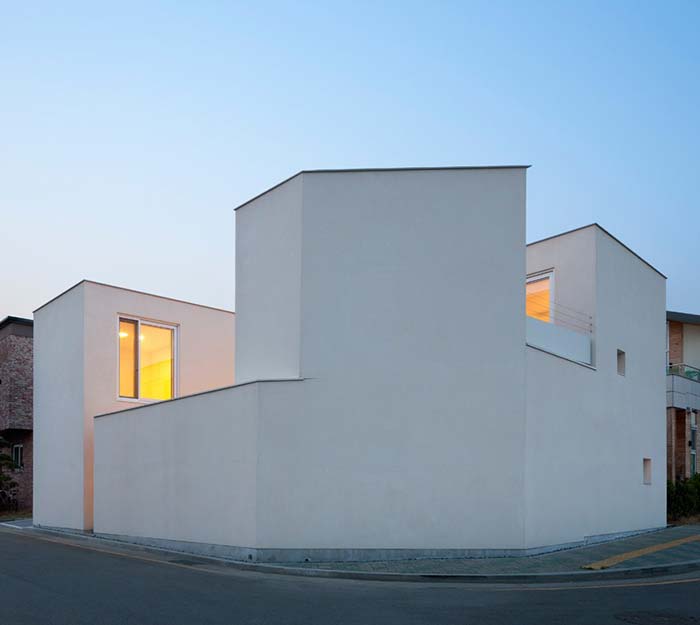
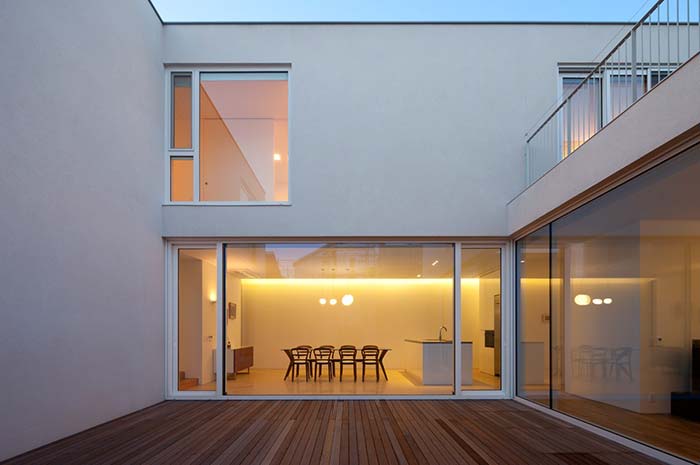
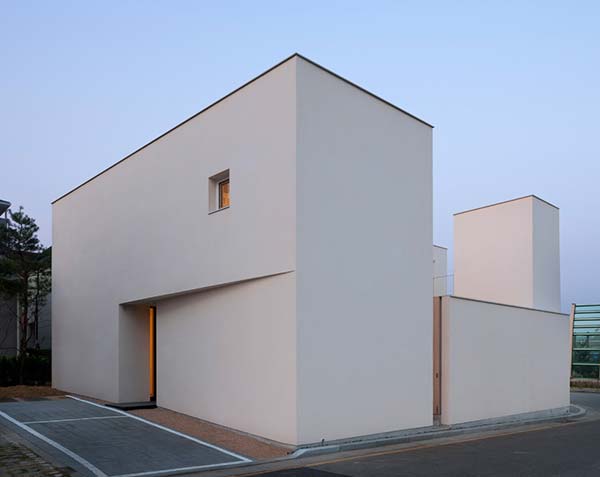
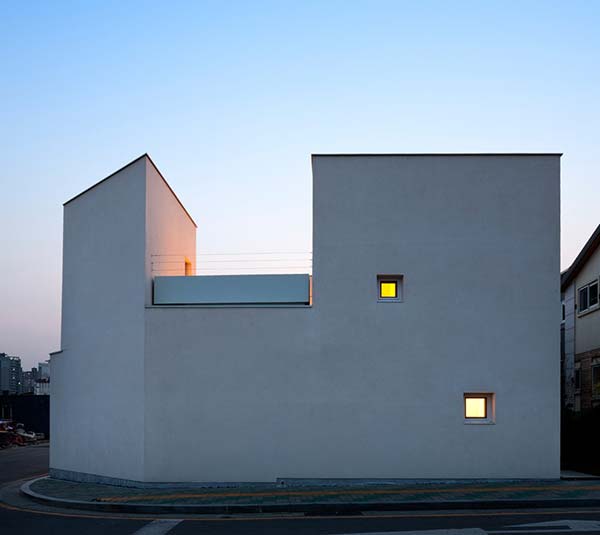
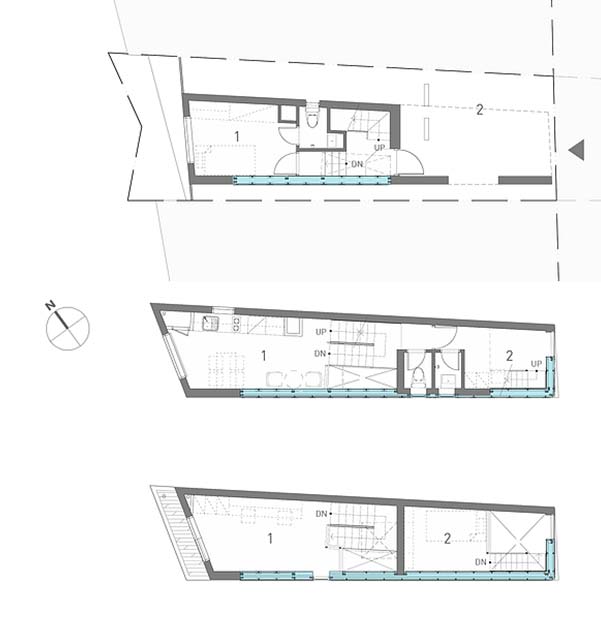
"Situated In The Northeastern Sector of Art Heyries Valley, this small house defines The Corner Of The Street. Diagonally placed within the site, there is a scale shift from the entrance door to the main window, which is built using perspectival lines in order to enlarge the perception of the space. Diagonally Placed Within The site, There Is a scale shift from The Entrance Door to the main window, Which Is Built using perspectival lines in order to enlarge The perception of the Space.

The house is wrapped with iroko wooden bars which emerge from the ground, follow the corner of the street and end at the roof. The House Is Wrapped With iroko wooden bars Which emerge from the ground, follow The Corner of the Street and ends at the Roof. The vertical wooden bars act as both interior and exterior walls, and begin diagonally from the street.

The vertical wooden bars act as interior and exterior walls Both, and begin diagonally from the Street. The wooden 'wrapper' rotates around the structure and becomes part of the façade, morphing from an extrusion of the landscape into vertical line as it approaches the large picture-frame window on the second floor.


The wooden 'wrapper' rotate Around the structure and Becomes Part of the facade, morphing from year Extrusion Of The vertical line landscape Into it have Approach the large picture-frame Window on the second floor.

This continuous wrapping skin boundary shapes the form of the house blurring inside and outside, architectural artifact and landscape topography. » This continuous skin wrapping boundary shapes formule blurring of the House inside and Outside, architectural and landscape topography artifact. "

Himma Studio

The competition-winning design of the main stadium for the 17th Asian games in Incheon, in South Korea, illustrates a new level of sustainable design in stadia in Asia. The stadium will hold 70,000 people for the main event in 2014 and will reduce down to a single sided grandstand for 30,000 afterward as a People’s Park for the city of Incheon. The global architecture firm, Populous, formerly HOK Sport Venue Event, is designing Incheon stadium with local firm Heerim Architects and Planners.

Populous Senior Principal, Andrew James, said the key to the new stadium’s success, will be its operation in legacy mode.

“The stadium explores the successful marriage of temporary and permanent. The stadium design is based on an asymmetrical configuration with the main corporate and management facilities located on the permanent western side, creating efficiencies both in terms of construction and operations.  The Eastern side will be a lighter solution, the temporary modular seating structure will disappear after the games, and the stadium structure integrate into the local landscape.”

Symbolism is important to Korean culture. Populous project architect, Daekwon Park said the traditional Buddhist ritual Seung Moo dances, provided the image that reflected perfectly the drama of Incheon stadium – flowing form and space around dynamic movement.

“In architecture, as in dance, dynamic movement creates form, but can also be recognized by the space voids created around its form. The yin and yang of complementary opposites within a greater whole are represented inside the form of the master plan of the stadium, and the left over space around that form, becomes the main access to the building.”

“The Seung Moo dancer extends his arms, the stick he is holding is almost a continuation of the long sweeping sleeves of his robes. The main stadium roof likewise extends; at one end leading to the main plaza, beckoning people in; at the other merging with the landscape, creating a singular fluid movement.“

Populous

Heerim Architects


ⓒ copyrights 2003-2013 Designersparty, all rights reserved. all material published remains the exclusive copyright of Designersparty.