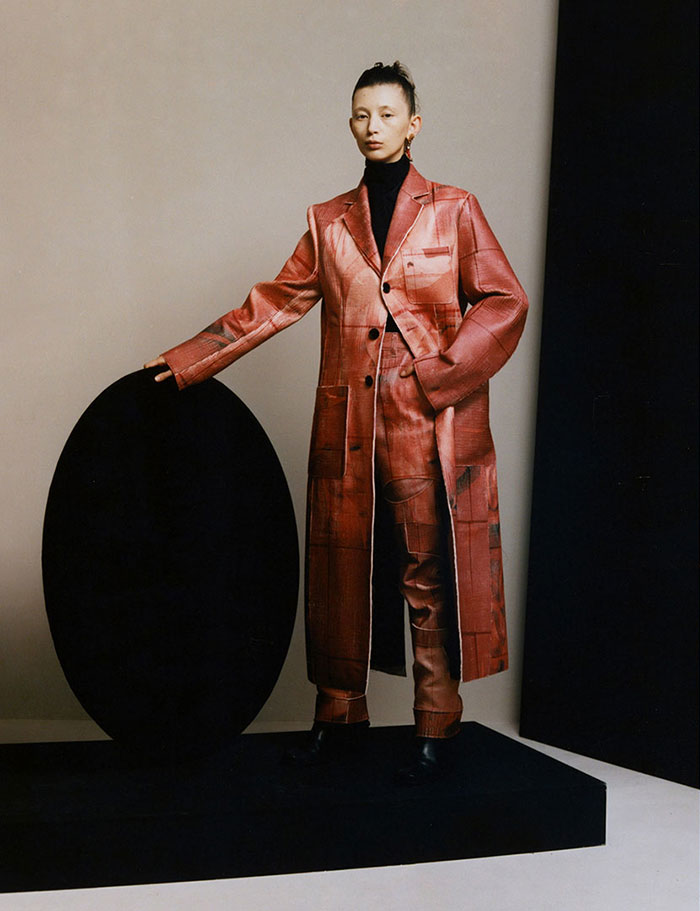
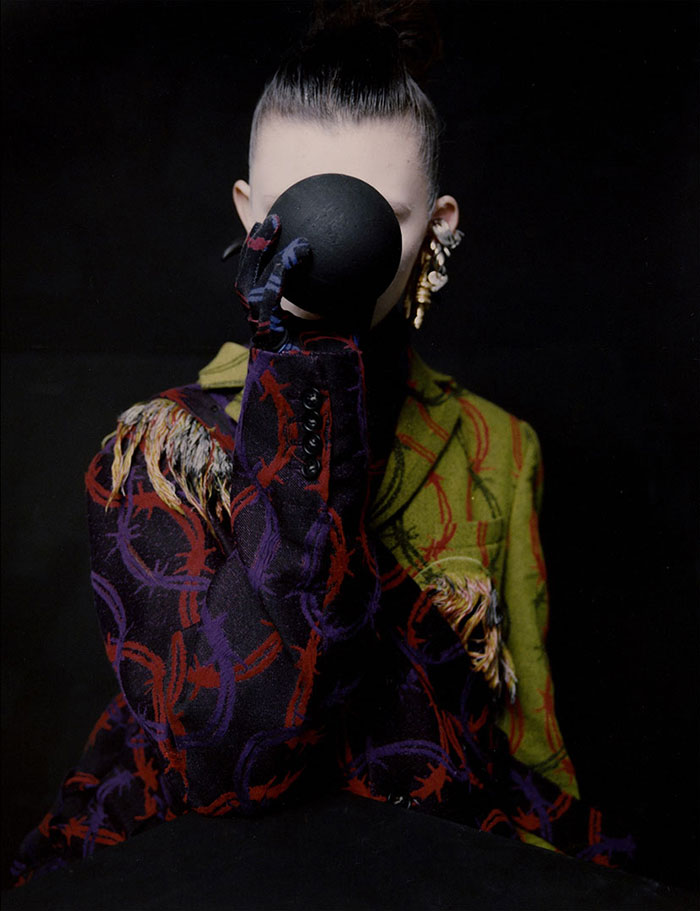
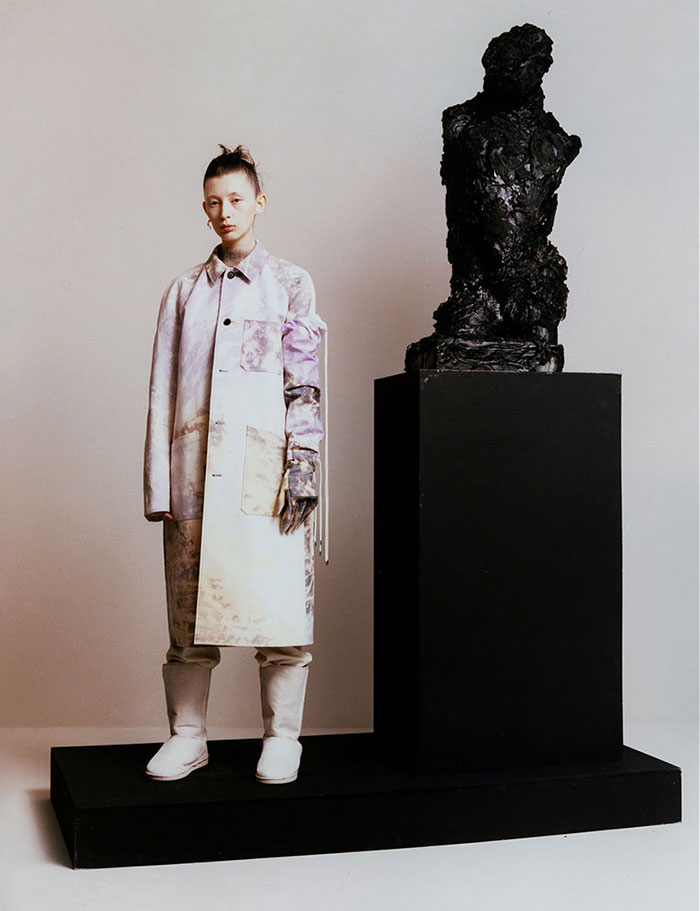
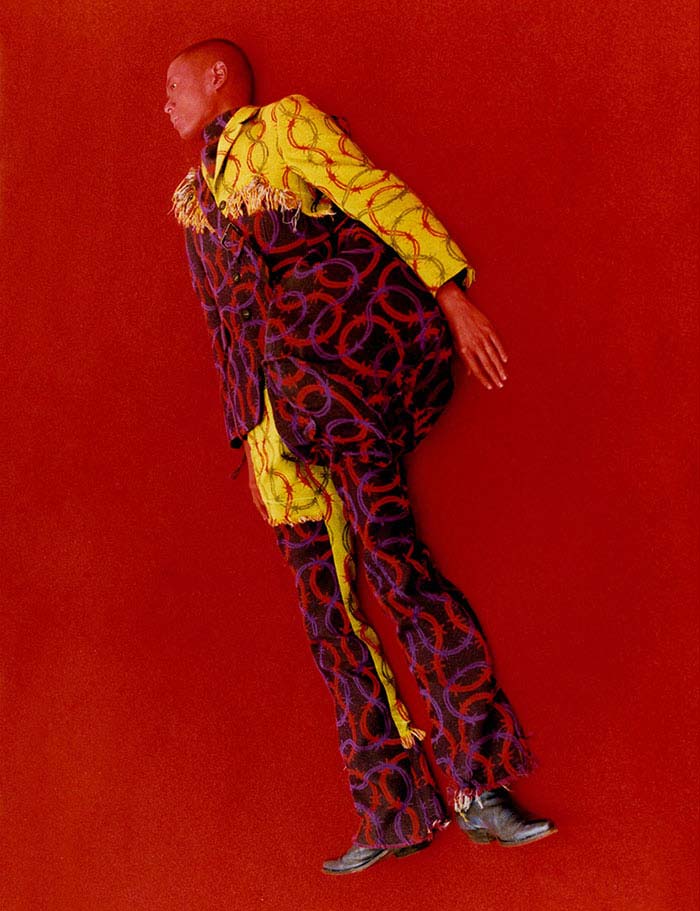
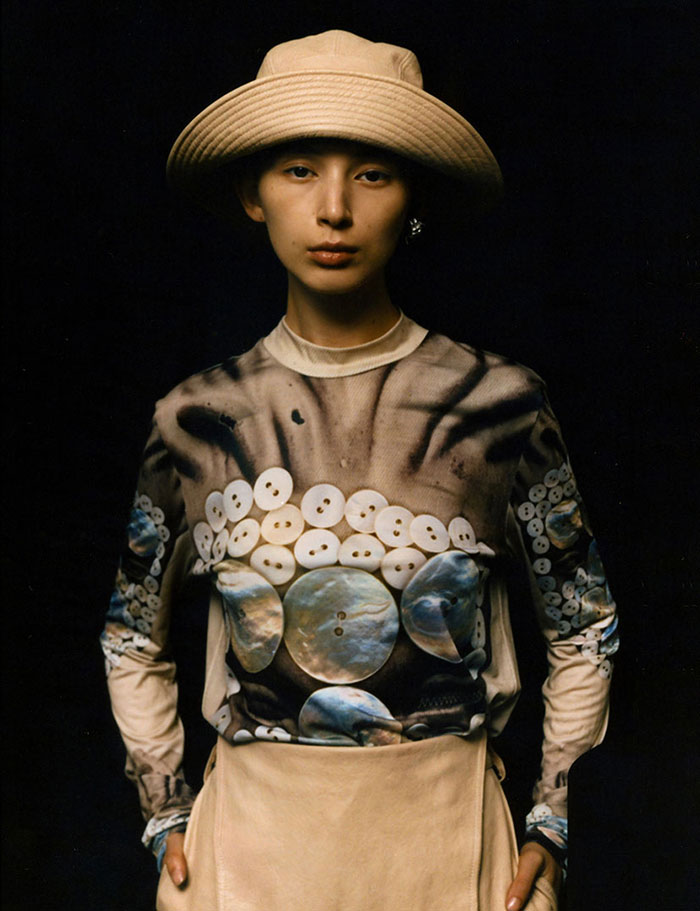
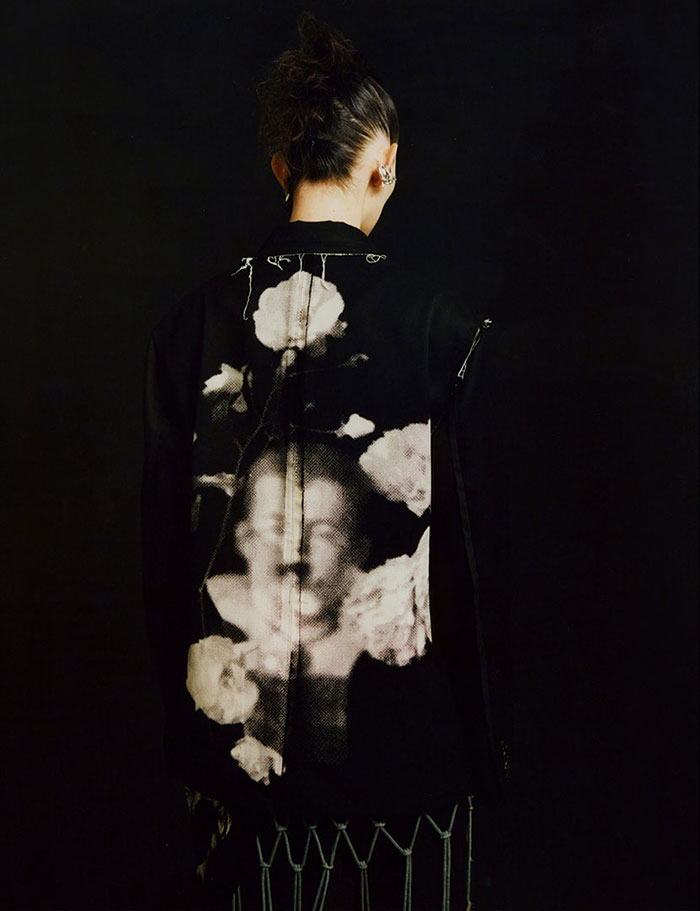
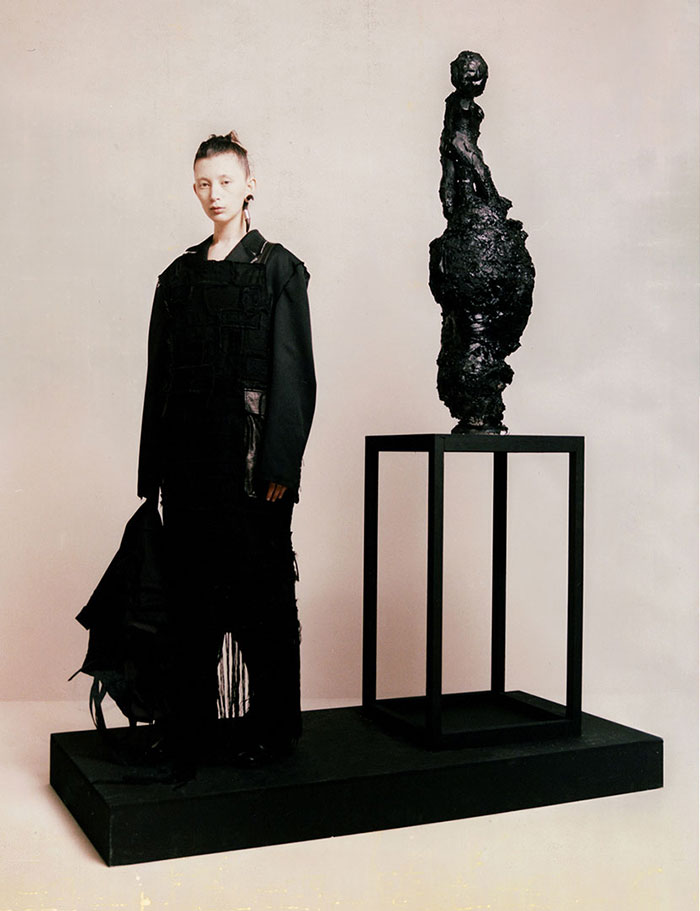
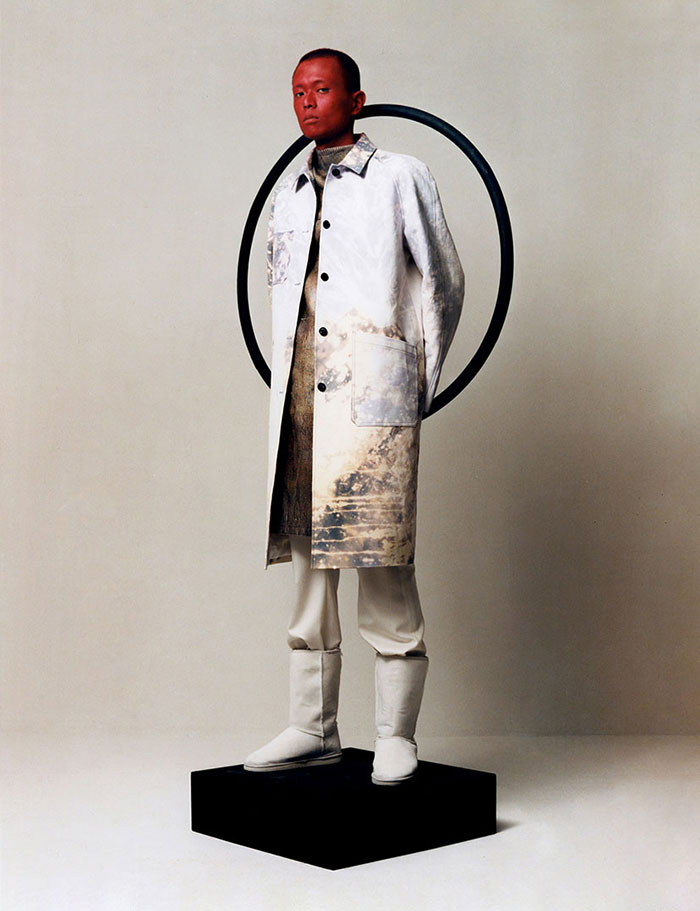
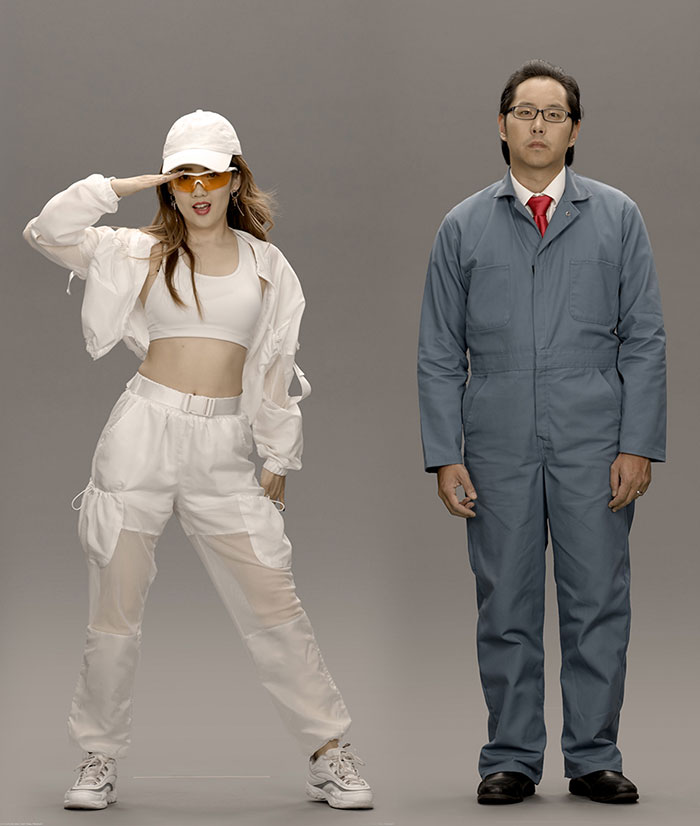
Famed photographer CHOGISEOK, renowned for his unique conceptual and filmic style, has successfully put himself on the map of the fashion industry with his peculiar lens on lookbooks and editorials. Now the artist has taken to his Seoul-based fashion imprint KUSIKOHC to offer up an equally ideational lookbook for the brand’s third collection, titled “WHY [ ] STARTED.”
The new collection is thematically categorized into three categories: Showpiece, Ready-to-wear, and Jewelry. Showpieces are made up of one-of-a-kind items, from luxuriously crafted patchwork parkas and ponchos, printed dresses, and Jacquard-embroidered suits.
The ready-to-wear line dives into more production-based staples, offering up various jackets, printed tops, and various bag and hat accessories. The jewelry line remains equally unique, offering up some gothic-styled pieces that fit well into the avant-garde pastiche employed throughout the collection.
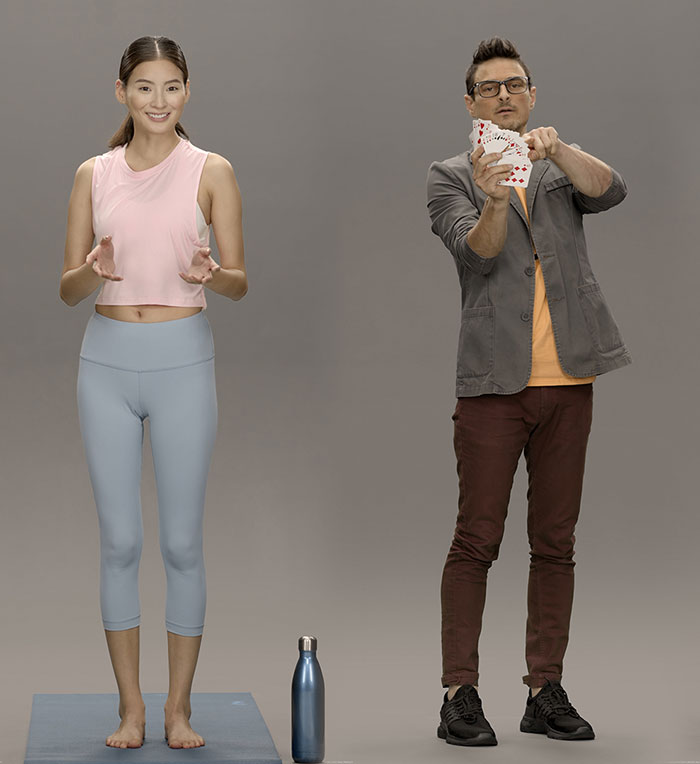
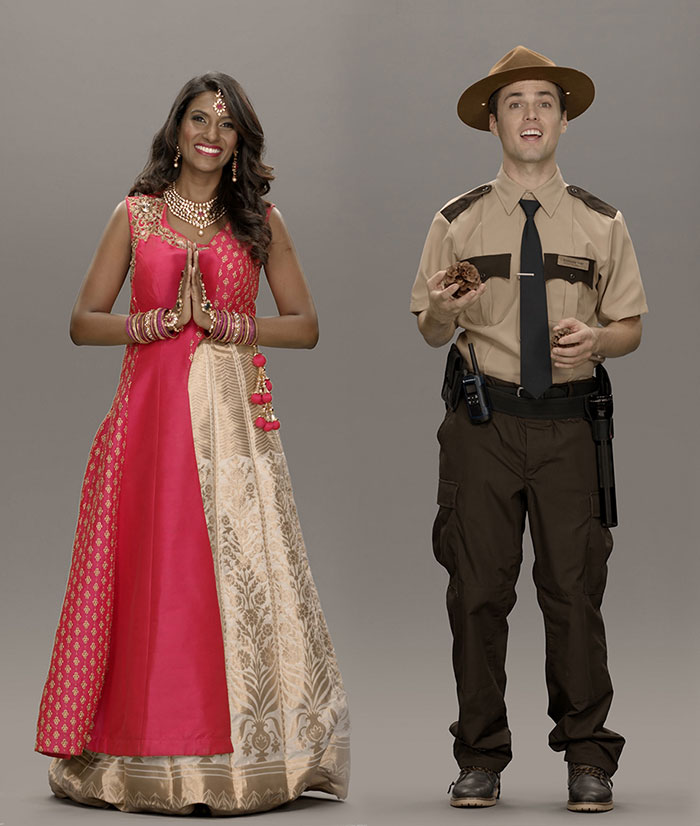
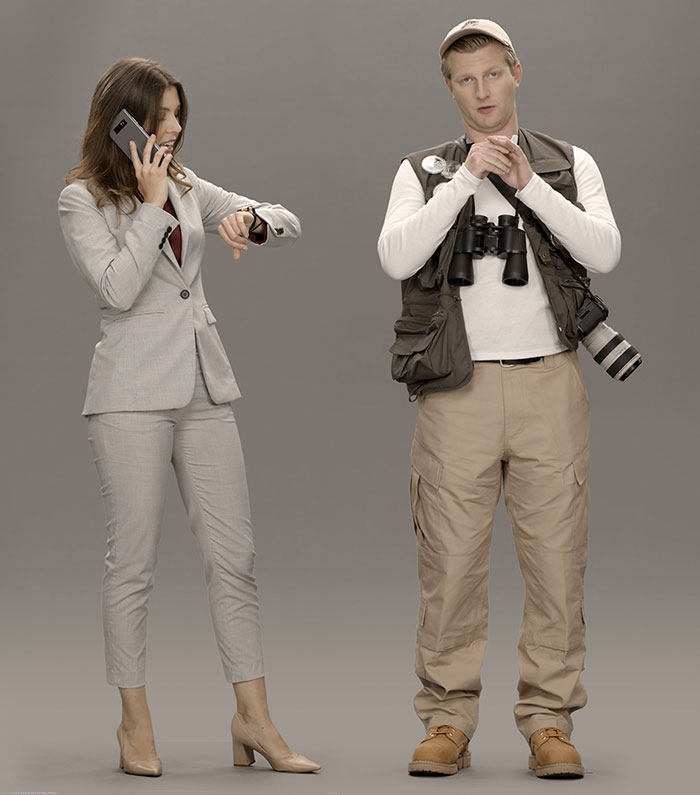
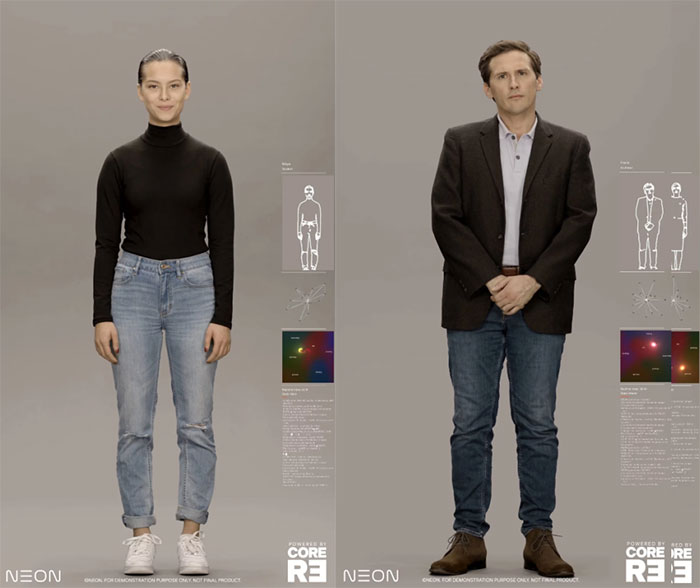
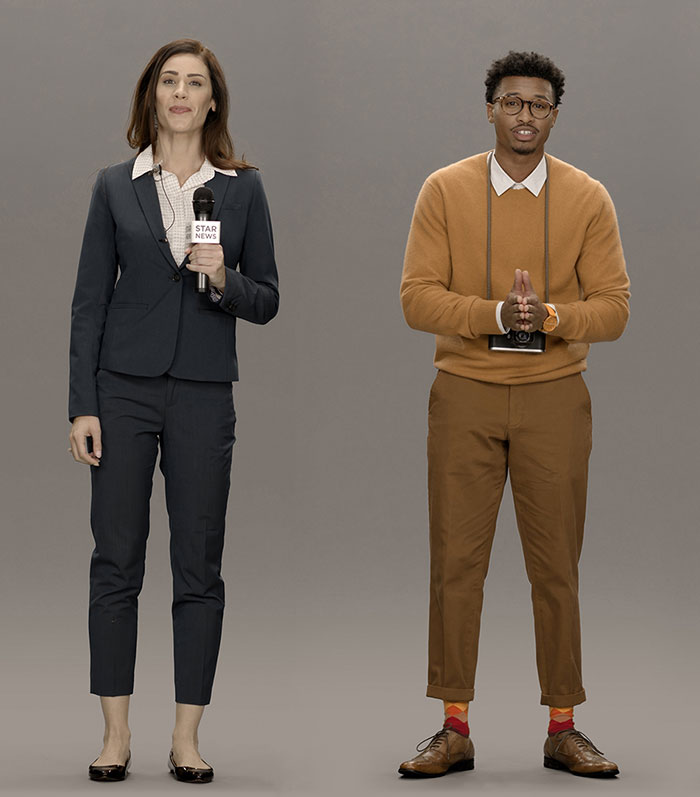
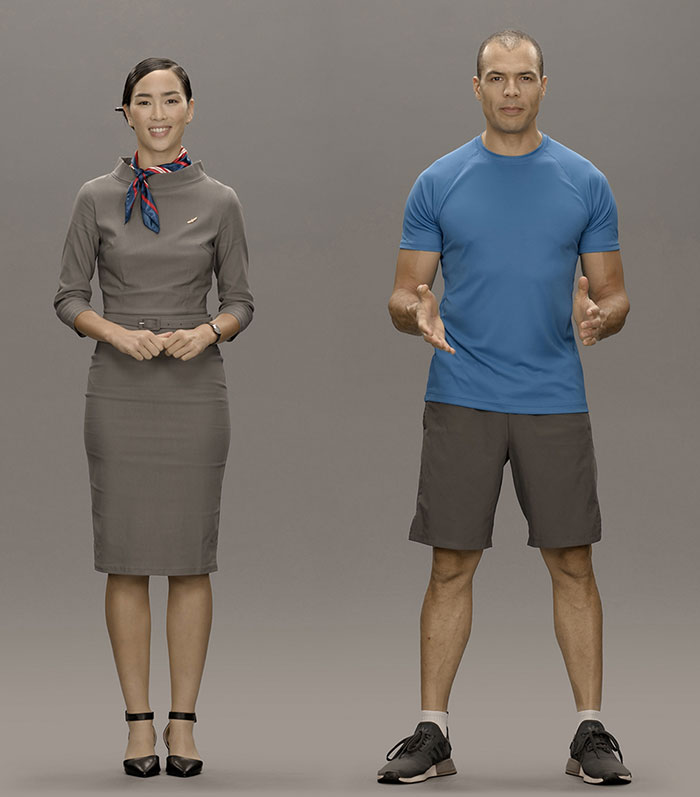
Star Labs, an innovation lab backed by Samsung, displayed its AI-powered lifeforms called Neons at CES in videos on giant TVs. At human scale, one is a yoga instructor who can help you perfect your downward-facing dog; another is a local news anchor who can deliver the news based on interests in your preferred language while a financial adviser Neon can help get your retirement plan in order.
"The marketing rhetoric around the Neons is quite extreme at a time when AI generates lots of confusion and anxiety [with topics such as] humans replacing machines, AI ethics issues and deep fakes," said Thomas Husson, a principal analyst at Forrester Research. "But if they're able to successfully express emotions, they would help enhance interactions between consumers and brands, and more broadly humanize technology."
Despite Samsung's backing, Neon is not related to any Samsung products or its Bixby voice systems. A Star Labs spokesperson told CNN Business that Samsung knew few details about the concept ahead of its CES debut.
Neon plans to launch later this year but has not yet landed on a business model. Mistry said a subscription service is a possibility and it's also working to secure business partnerships.
The idea of a "digital species" is undoubtedly controversial. Big names in tech, including Elon Musk and Bill Gates, have warned about the development of powerful artificial intelligence. Gates called AI both "promising and dangerous." These concerns typically revolve around what's known as artificial general intelligence, or AI that can, for the most part, do the things a human can do.
"As demonstrated by Neon, we are still very far from a commercially ready AGI solution," principal analyst Lian Jye Su of ABI Research said. "The best AI nowadays are narrow [ones] that performs singular tasks very well, such as the camera AI in our smartphones, the defect inspection camera AI on an assembly line, and the facial recognition AI in payment terminals."
According to Su, we should "always question the intention and financial rationale behind attempts to make artificial general intelligence a reality."
Other companies are developing AI that can better converse with us but without a human-like interface. Two years ago, Google showed off Duplex, which allows AI to make human-like phone calls, while Microsoft is growing its Cortana platform to be increasingly responsive.
Neon's concept also comes at a time when companies including Facebook (FB), Google (GOOG) and Amazon (AMZN) are working to gain back consumer trust after a series of data sharing scandals. In 2019, both Amazon and Apple were under fire for using third-party contractors to listen in and transcribe user requests made through their personal assistants. Putting a human-like AI in your home, one that learns your preferences for pizza, behaviors or finances, raises concerns about where intimate information could land.
"Our future can come without compromising our privacy," Mistry said. "And that is what we are designing -- an architecture [that makes sure] any interaction between you and your Neon or you and any Neon, no one has, including me, as a CEO of this company, access to that information."
NEON - OFFICIAL Logo Reveal
At this stage, a Neon remains a simulated human assistant that merely aims to give intelligent, human-like responses.
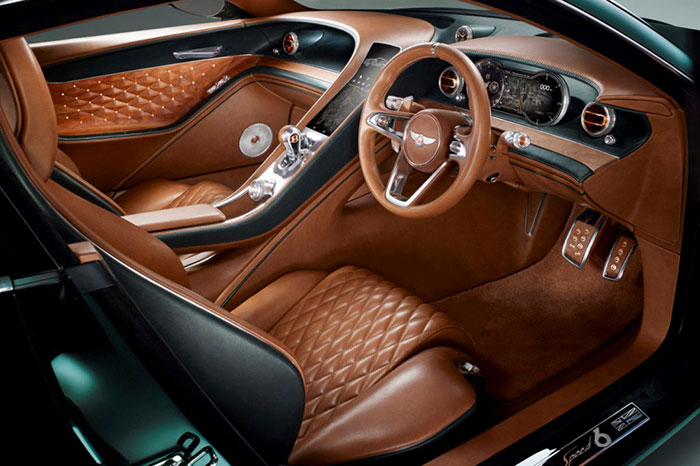
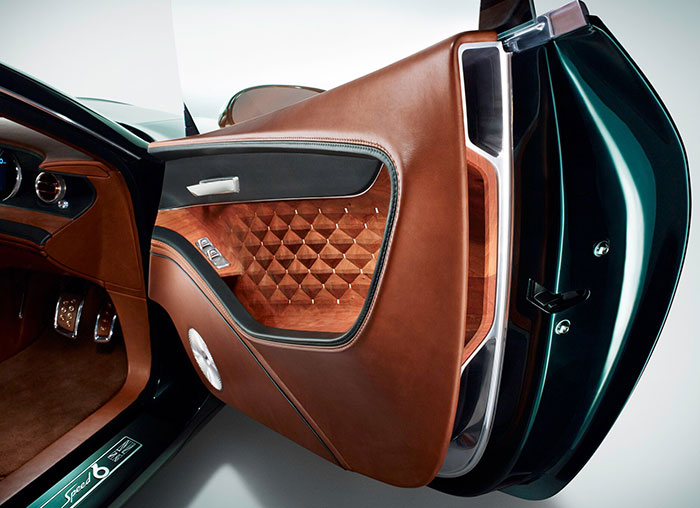
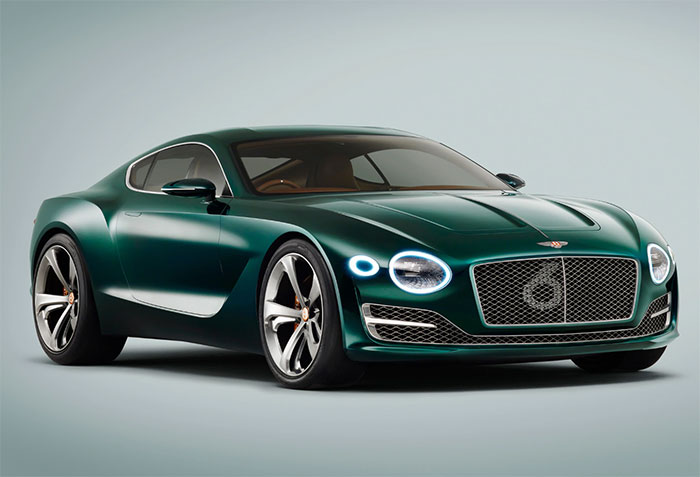
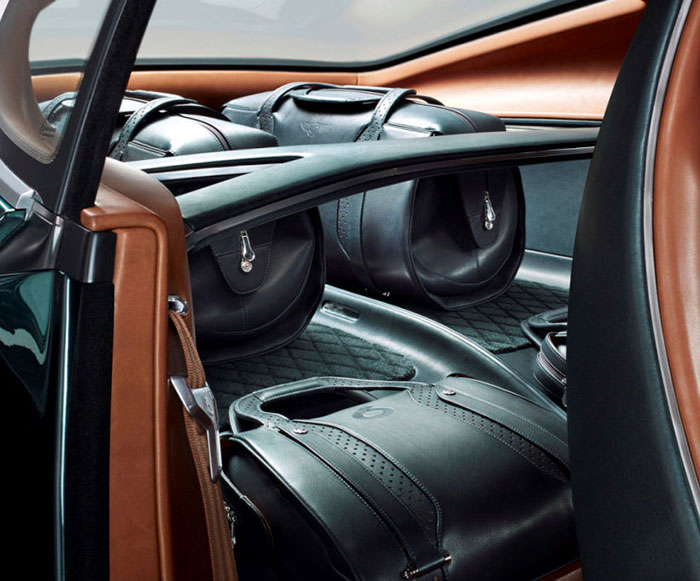
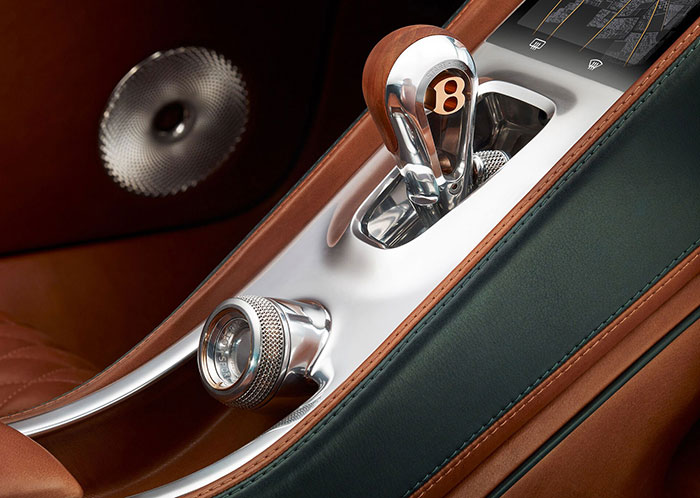
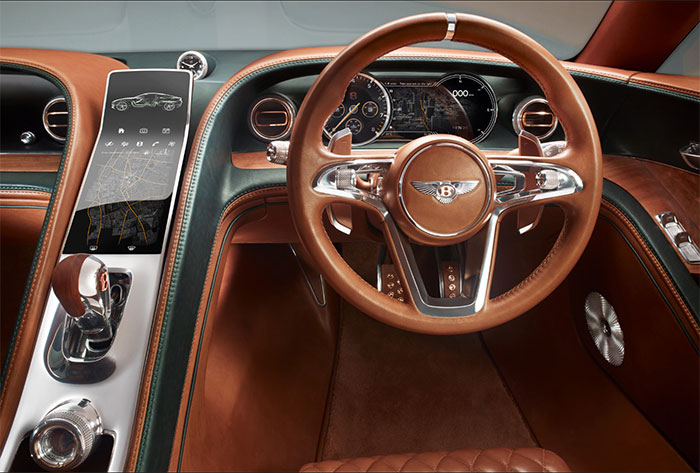
Sangyup Lee, Head of Exterior and Advanced Design at Bentley, added, "EXP 10 Speed 6 dominated the conversation at Geneva earlier this year, and is one of the most talked about concept cars of recent times. Our progressive and innovative design - while retaining a classic British look - is also thoroughly modern and dynamic."
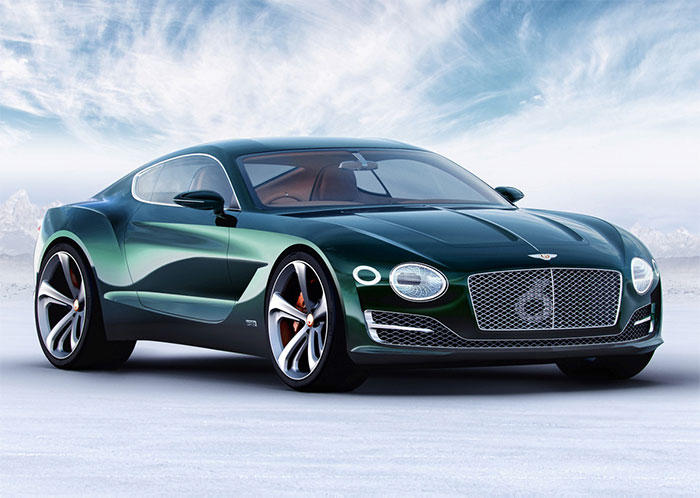
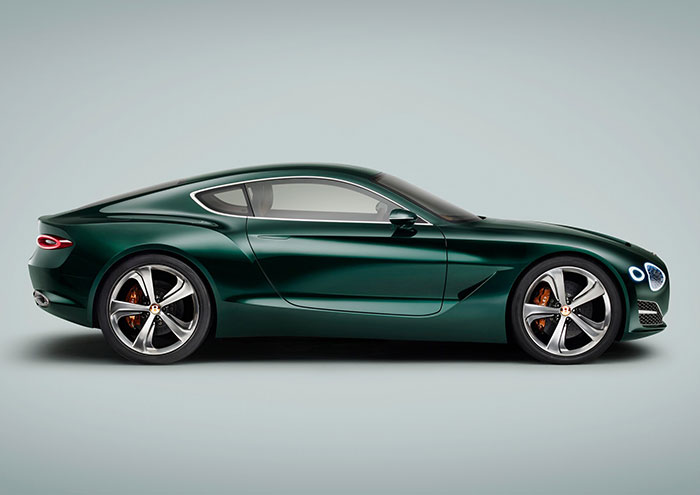
The Bentley EXP 10 Speed 6 concept car came out of the Geneva show and went straight into a program for market research. Bentley is seriously investigating its potential as a fifth model line for about 2018. “When the Bentayga SUV is executed [in 2016], the engineers can jump to the next product,” says CEO Wolfgang Durheimer. The EXP 10 is a smaller, lighter, and sportier car than the Continental GT. “But not cheaper,” Durheimer says.
We spoke with Sang Yup Lee, Bentley’s head of exterior and advanced design. Lee, 42, was previously at VW‘s California studio and before that designed the Camaro at GM. He says the EXP 10 is a continuation of a long-cherished dream at Bentley’s design department. “It was a skunkworks project at first, and then we showed the idea to management, and they approved.”
It might be smaller than the Continental GT, but Bentley is not making claims it would be a flyweight. “Our heritage is weight, but it’s also torque and luxury,” Lee says. “Now we want to develop a sports car against the AMG GT and Aston Martin Vantage. It would still be the most luxurious car among them. But we want kids to have a poster of a Bentley on their walls. If you don’t love this at first sight, it hasn’t worked. The Bentley brand design has been very safe. Now we want to push forward, both in form language and in detail execution.”
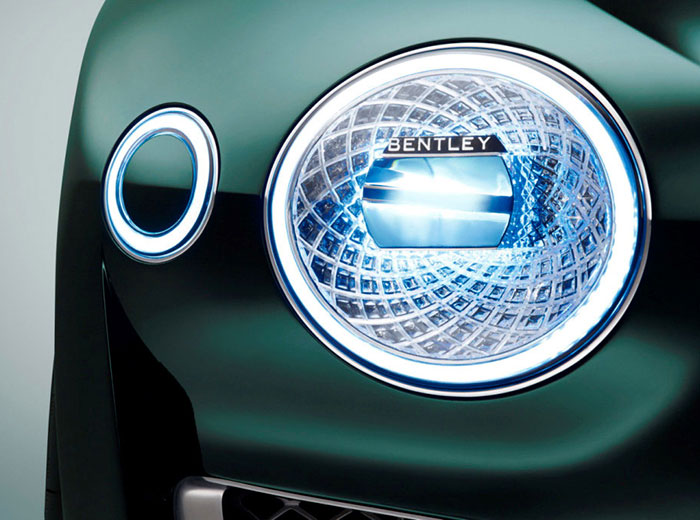
He points out the shallow execution of the traditional Bentley grille and its complex 3-D metal-printed rendering. Having two round headlamps on each side of the grille is a Bentley fixture, Lee says, but he struck a new note here. He has me crouch in front of the car, and from that angle they appear perfectly circular. But seen from higher or from the quarter view, they stretch into ovals. “It gives you something to discover,” Lee says. Inside, the glass is engraved in spiraling diamond outlines. “We call them whiskey glasses,” Lee smiles.
"We want kids to have a poster of a Bentley on their walls"
Around the sides of the car, between the two sharply drawn lines that emerge from the skin at door handle and sill height, there’s a third, much softer positive volume, which he says makes it look lighter. At the tail, the lights clusters are pure ovals to match the tailpipes. “Before, we always had the lit ovals in rectangular lights,” Lee says.